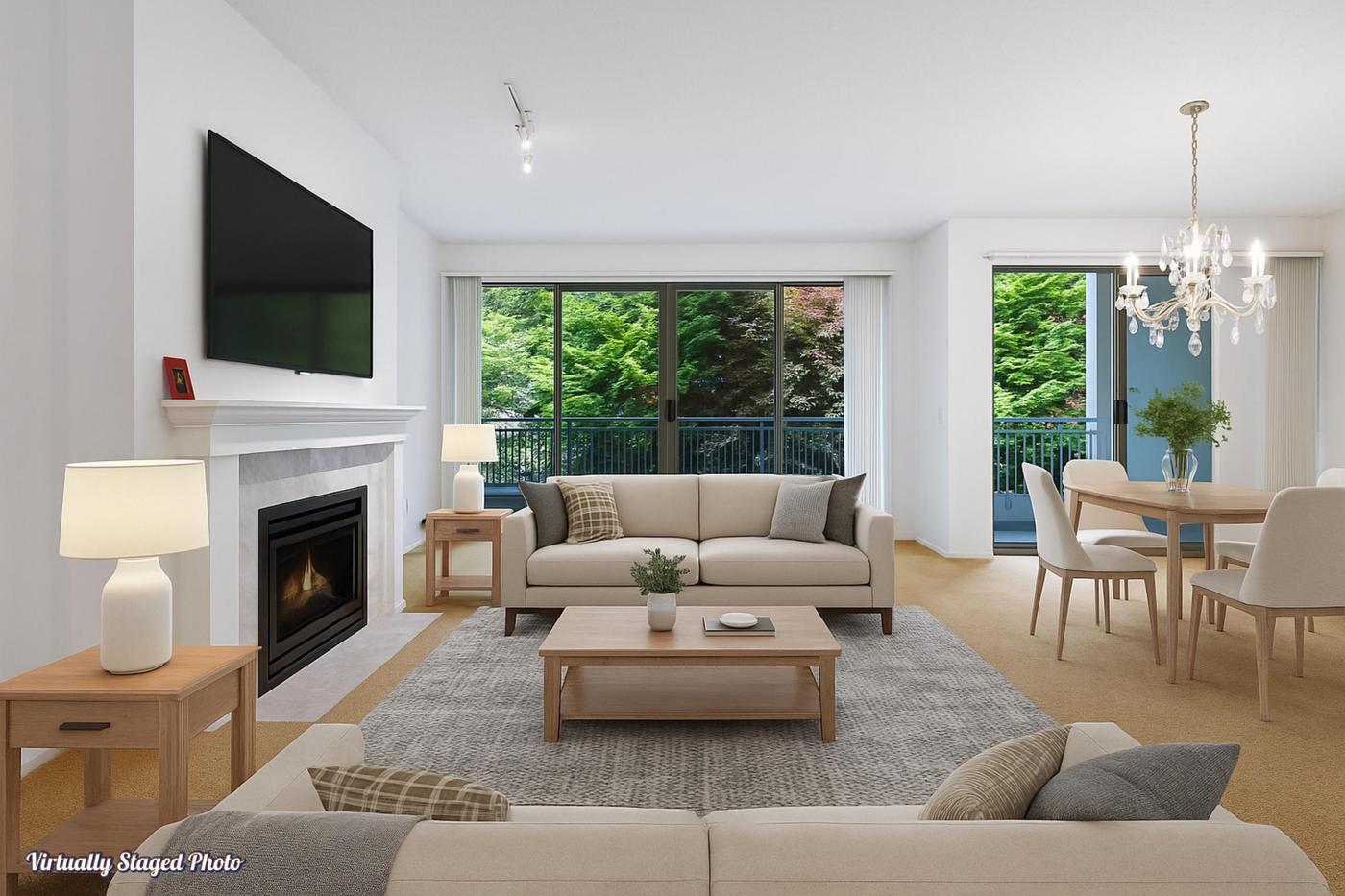
Virtual staging and physical staging solve the same problem: an empty or tired room that buyers can't picture living in. The difference is where the furniture lives. Virtual staging adds it to the listing photos for a one-time fee per image. Physical staging puts real furniture in the home for showings, at a monthly cost. For most vacant condos, virtual staging covers the online job. For homes where in-person showings carry the sale, physical staging is often worth the extra cost.
This guide compares the two on cost, on what buyers experience, and on the disclosure rules BC licensees work under, so you can recommend the right one to a seller.
What each option actually is
Virtual staging is digital. The photographer shoots the vacant rooms, and an editor adds furniture, rugs, art and lighting to selected photos. Nothing changes in the home itself. Buyers see furnished rooms online and empty rooms at the showing.
Physical staging is a service from a home stager. They assess the home, bring in rented furniture and decor (or rework the seller's own), and leave it in place until the home sells or the contract ends. Buyers see the same furnished rooms online and in person.
Both are legitimate. Neither should change the property itself: walls, flooring, fixtures, views and condition stay as they are.
Cost: one-time fee vs monthly rental
Virtual staging
At YVR Listing, virtual staging costs $40 for one staged image as of November 2026, with 3-, 5- and 10-image options priced at booking. There is no monthly charge and nothing to remove when the home sells. The pricing page shows the live price, including any seasonal promotion.
Physical staging
Physical staging is priced by the stager, and quotes vary with the size of the home, the number of rooms and how long the furniture stays. RE/MAX Canada's guide to staging costs (published August 2025, Canada-wide figures) lists typical components:
- an initial walk-through consultation at $150 to $600
- furniture arrangement at about $250 per room
- monthly decor and furniture rental at $500 to $600 per room
The same guide notes that some stagers set a minimum term, so a home that sells in its first week can still owe the full contract.
A worked comparison
Take a vacant two-bedroom condo where you want the living room, the primary bedroom and the second bedroom staged.
- Virtual: three staged images at the single-image rate is $120, or less with a multi-image option. That is the whole cost however long the listing runs.
- Physical, using the RE/MAX figures: three rooms at $500 to $600 a month is $1,500 to $1,800 in rental, plus about $750 to arrange them and $150 to $600 for the consultation. The first month comes to roughly $2,400 to $3,150, and each further month adds the rental again.
These are planning numbers, not quotes. A Vancouver stager may price differently, and many quote a package rather than line items. The point holds anyway: virtual staging is a small one-time cost, while physical staging is a larger cost that grows with days on market.
What buyers experience
Cost isn't the only difference. The two options create different experiences at each stage of a buyer's search.
Online
In listing photos, good virtual staging and good physical staging look similar. Both show scale, suggest a use for each room and make the gallery feel finished. Virtual staging has one practical advantage online: you can stage a den as an office and show the same room unstaged beside it, which helps buyers who want to judge the bare space.
At the showing
This is where they part ways. With physical staging, the room a buyer walks into matches the photo. With virtual staging, it doesn't: the sofa and the rug from the photo aren't there. Buyers who expect that, because the photos were clearly labelled, usually take it in stride. Buyers who didn't notice the label can feel misled, and that feeling spills over to the rest of the listing.
After the offer
Physical staging furniture belongs to the stager, so the contract of purchase and sale should make clear what is and isn't included. Virtual furniture doesn't exist, so it can't be included, but an unclear listing can still create the impression that it was. The BC case below shows how that goes wrong.
Disclosure in BC: what the rules say
BCFSA's consumer guide to real estate advertising states that licensees may not create false or misleading advertising, and lists digitally altered or enhanced photos among the forms that advertising can take. It also says every ad for a listed property has to follow the same rules, wherever it runs.
The risk is real. In September 2024, CTV News reported that BCFSA upheld a $6,000 penalty against a Kelowna-based licensee. MLS photos of a Christina Lake cabin had been digitally altered to show furnishings that weren't in the property and to show it in a better state of repair than it was. The buyer made offers without visiting, the accepted contract listed the furnishings from the photos as included, and the buyer found a different property when he arrived.
That case went beyond virtual staging, because the photos also hid the cabin's condition. But it shows what a regulator looks at: whether the advertising represented the property accurately. For virtual staging, that means:
- Label every staged image as virtually staged, on the image or in a caption that travels with it.
- Keep the unstaged photo of each staged room in the gallery, ideally right beside it.
- Change only furniture and decor. Never edit out damage, swap finishes or alter a view.
- Keep the labels everywhere: MLS, the property website, social posts, brochures and ads.
- Keep the contract clear. If a buyer asks whether the furniture in the photos is included, the answer and the contract should both say no.
Our earlier guide on when virtual staging helps and its limits covers labelling and gallery order in more detail.
When each option fits
Virtual staging usually fits
- Vacant condos and townhomes where most buyers shortlist online and the layout is simple. Many units in Vancouver and Burnaby towers fit this description.
- Flex rooms and dens, where the job is to show one possible use.
- Tenant-vacated or estate listings where there's no time or budget for a stager.
- Listings priced where a monthly staging bill is hard to justify.
Physical staging usually fits
- Higher-priced homes where buyers attend several showings and an empty house would feel cold in person.
- Homes that will be marketed at open houses, where the in-person impression drives the offers.
- Rooms with awkward proportions that buyers need to see furnished in real life to believe the furniture fits.
Combining them
Some sellers stage the main floor physically and stage the remaining bedrooms or a basement suite virtually. That keeps the showing experience strong where buyers spend most of their time, without paying monthly rent on rooms that matter less.
Getting the most from either option
Shoot for staging. Whichever option you choose, the photography carries it. Tell the photographer which rooms will be virtually staged so those frames leave clear floor space and show at least two walls. For physically staged homes, book the shoot after the stager finishes, not before.
Pair it with a floor plan. A LiDAR floor plan lets buyers check the furniture scale against real room dimensions. It keeps virtual staging honest and confirms that the stager's furniture is realistic.
Plan the timing. Virtual staging is added after the shoot, so leave time for edits before the listing goes live. Physical staging needs delivery and setup first, so book the stager early enough that the photos show the finished rooms.
The short version
Virtual staging is the low-cost choice for showing a vacant home's potential online, as long as every staged image is labelled and the real room stays in the gallery. Physical staging costs more and keeps costing while the home is listed, but it gives buyers the same furnished rooms in person that they saw online. Pick the one that matches where the sale will be won: on the screen or at the showing.